
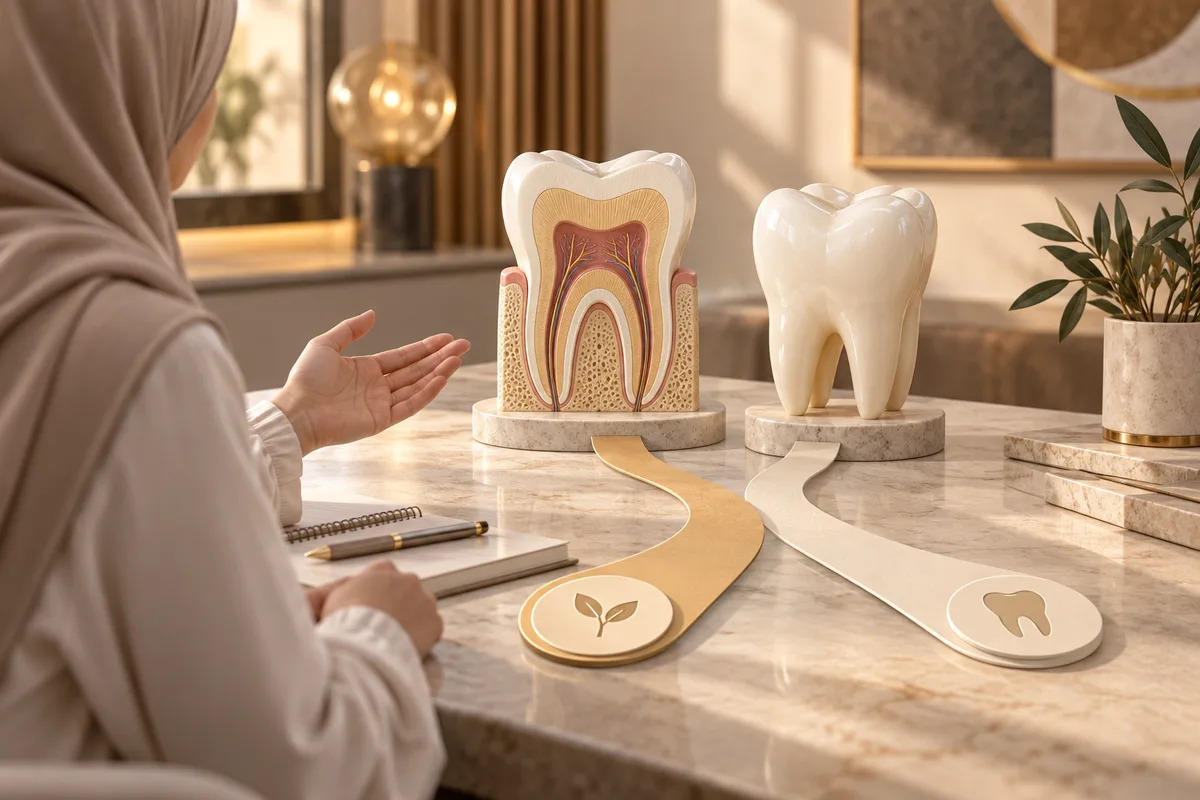
What does root canal treatment actually treat?
Root canal treatment addresses the tissue inside the tooth and its canals. The clinician cleans and seals the canal system, and the tooth then needs an appropriate final restoration. It does not rebuild missing supporting bone or solve every crack.
Ask the dentist to explain the diagnosis in ordinary language. Pain from decay, a cracked tooth, the gums or a neighbouring tooth can feel similar to a patient. Appropriate tests and imaging help identify the source before an irreversible decision is made.
What makes a tooth worth trying to save?
The assessment includes remaining sound structure, the extent of damage, root condition, gum support and the possibility of a durable restoration. A tooth may need more than canal treatment: a build-up, crown or other protective restoration can be part of the overall plan.
If the prognosis is uncertain, ask which finding creates that uncertainty and whether a specialist opinion would help. A useful explanation distinguishes a technically difficult tooth from one that cannot be restored appropriately.
When might extraction be considered?
Extraction may be considered for a tooth with damage or support loss that prevents predictable preservation. The clinician should explain the reason and suitable alternatives. Not every painful or previously root-treated tooth falls into that category.
If treatment has failed before, retreatment or another endodontic approach may sometimes be possible. Ask whether those options apply before assuming that an implant is the next step. An implant is a replacement for a missing tooth, not a reason to remove a maintainable one.
How should I compare time, fees and future treatment?
Compare the full saving plan with the full extraction-and-replacement plan. Root canal fees alone may exclude the final restoration. Extraction fees alone may exclude the replacement tooth, temporary work and any preparatory care.
Discuss function, appearance, likely visits and follow-up, as well as cost. If you choose extraction, ask whether replacement is needed, when planning should start and what the suitable bridge, denture or implant options would involve.
- What is the diagnosis and prognosis?
- Is the proposed fee for canal treatment only or the restored tooth?
- Would a specialist assessment change the options?
- If extracted, what is the full replacement plan?
When should a painful tooth be assessed urgently?
Seek prompt dental advice for severe or worsening pain, swelling, discharge or a suspected abscess. If swelling affects breathing or swallowing or spreads rapidly across the face, seek emergency medical care. Do not wait for a blog answer or rely on antibiotics left over from another illness.
For an assessment at Gemini in Kazan Plaza, tell the team the symptoms and any recent treatment when arranging the visit. Availability and the appropriate clinician should be confirmed directly; this page does not promise an emergency appointment or a specific treatment.