Why does the amount of healthy tooth matter?
Restorations rely on the structure left after disease or a failed restoration is addressed. A small cavity is a different problem from a tooth with thin walls, a large old filling or a broken cusp. The dentist assesses what can be supported and protected.
Ask to see the damage and understand what may become clearer once an old filling is removed. Sometimes a provisional plan changes because the true extent was not visible beforehand. Agree how additional findings and costs will be discussed before work proceeds.
How do fillings, onlays and crowns compare?
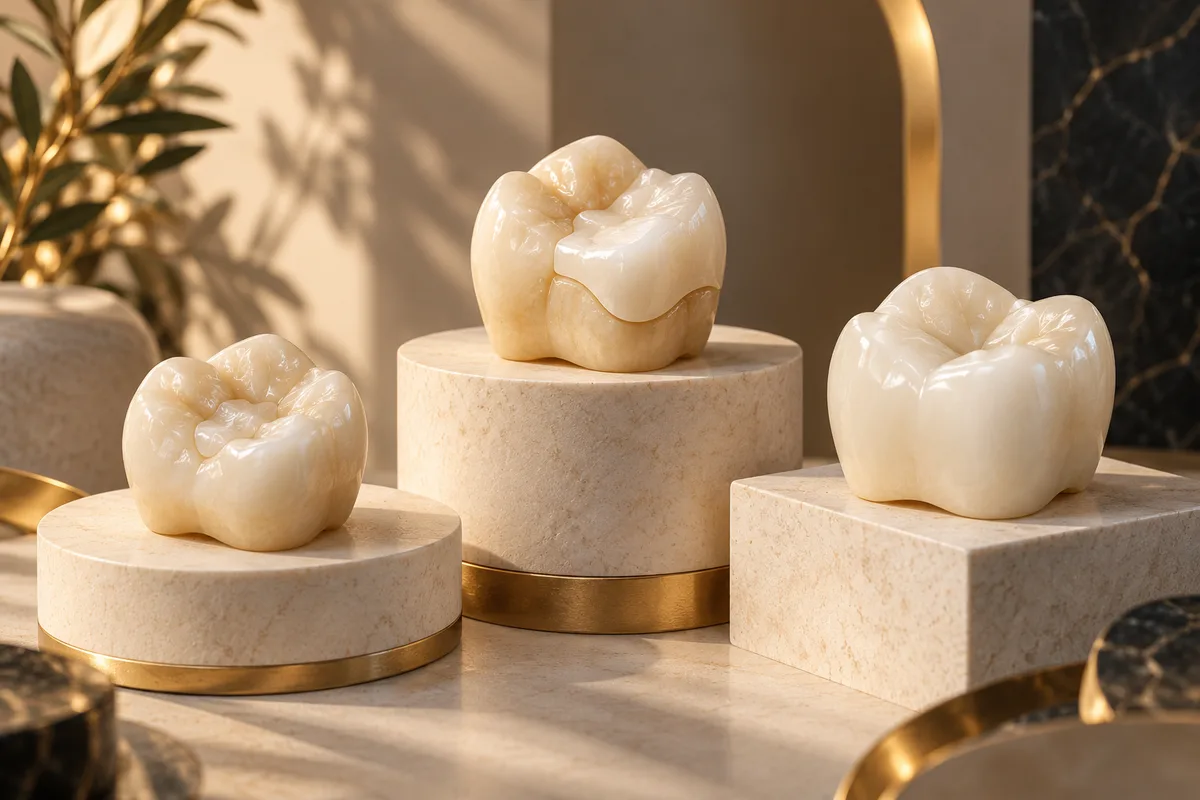
A direct filling is placed into the prepared area. An onlay restores selected surfaces and may protect one or more cusps. A crown fits over a more fully prepared tooth. Different materials and fabrication methods can be used within these categories.
The aim is a suitable seal, support and function while preserving appropriate sound tissue. The dentist should explain why a smaller repair is enough or why broader coverage is advised. Material names alone do not tell you how much tooth would be prepared.
| Option | General role | Question to ask |
|---|---|---|
| Filling | Repair a local area | Are the surrounding walls adequately supported? |
| Onlay | Restore selected surfaces and cusps | Which parts need protective coverage? |
| Crown | Cover the prepared tooth | Why is full coverage appropriate here? |
Does root canal treatment always require a crown?
The final restoration is chosen according to the treated tooth, remaining structure and biting forces. Many weakened posterior teeth need protection, but a universal rule for every tooth is not useful. Ask what your individual tooth requires and how soon it should be completed.
An unrestored or temporarily restored tooth may remain vulnerable to fracture or leakage. Keep the planned restoration visit and follow instructions about chewing. Canal treatment and the final restoration should be understood as connected stages of preserving the tooth.
What should be included in the estimate?
Ask about assessment, removal of old work, the definitive restoration, any temporary work and follow-up. If a build-up, post or root treatment is being considered, ask why and whether it is included or conditional on further findings.
Compare quotations for the same tooth and design. A per-unit crown fee and a total restored-tooth plan can look very different. Write down the expected next steps and any decisions that remain open rather than relying on a verbal headline price.
What should I do if a filling or crown breaks?
Contact a dentist and avoid chewing hard foods on the affected tooth. Save a detached crown if possible and bring it to the assessment. Do not file the tooth or use household glue. Pain, swelling or a sharp edge causing injury should be described when booking.
At Gemini in Zayed, bring the available treatment history and explain when the problem began. Examination determines whether repair, replacement or another approach is appropriate; a broken filling does not automatically mean a crown or extraction.