What is the practical difference between an implant and a bridge?
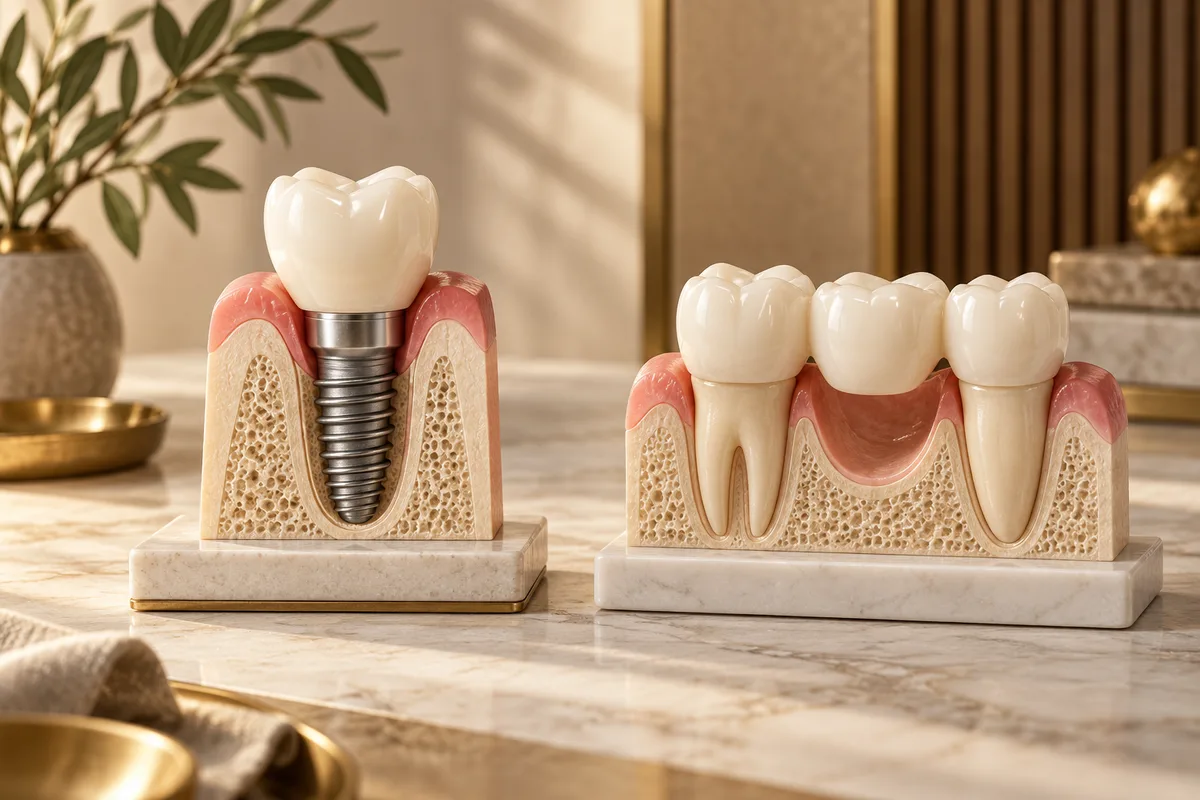
An implant is placed in the jaw and supports a crown through a connecting component. A conventional bridge usually links the replacement tooth to crowns on adjacent teeth. Some gaps can be treated with an adhesive bridge, which has a different preparation and support arrangement.
Ask the dentist to identify which bridge design is being proposed. A comparison between a single implant crown and a conventional three-unit bridge is different from a comparison with a small adhesive bridge. Drawings or photographs of the proposed design can make the discussion easier.
| Question | Implant crown | Conventional bridge |
|---|---|---|
| Where is the support? | In the jawbone | On neighbouring teeth |
| Is surgery involved? | Implant placement is surgical | Usually no implant surgery |
| What needs cleaning? | Around the crown and gum margin | Around supporting teeth and beneath the replacement |
| What affects timing? | Placement, healing and restoration stages | Supporting-tooth treatment and laboratory stages |
How do the neighbouring teeth affect the choice?
Healthy, minimally restored neighbouring teeth may make preserving their structure a priority. Teeth that already need crowns create a different discussion. The dentist must also check their roots, gum support and ability to carry the proposed bridge.
An implant does not make the surrounding mouth irrelevant. Gum disease, decay elsewhere, limited space and biting forces still matter. Ask what would happen to the plan if one supporting tooth or the implant developed a problem later.
How should I compare the cost and treatment time?
Compare complete written plans: assessment, any preparatory treatment, the final tooth and follow-up. For an implant, ask whether the implant body, abutment and crown are all included. For a bridge, ask how many units and which supporting-tooth treatments are included.
A quicker initial restoration is not the same as a smaller lifetime commitment. Repairs, cleaning visits and eventual replacement may differ. If you travel or have limited appointment flexibility, discuss that before accepting a timetable.
- Request the full proposed design and materials.
- Separate confirmed costs from work that depends on further assessment.
- Ask about a temporary tooth during treatment.
- Clarify maintenance and repair arrangements for both options.
Could a denture or another approach be reasonable?
A removable partial denture may be suitable when several teeth are missing, surgery is unsuitable or a temporary replacement is needed. In selected situations, monitoring a gap or orthodontic space management may also be discussed. These are individual decisions, not interchangeable products.
Tell the dentist what matters most: chewing, appearance, avoiding surgery, preserving nearby teeth or keeping costs manageable. A useful consultation explains the suitable alternatives and why others would be less appropriate.
What should I bring to a Gemini consultation?
Bring previous X-rays if available, a list of medicines and details of any existing bridge or denture. Explain when the tooth was lost and whether there is pain, swelling or difficulty chewing. Previous records may help, but the dentist decides whether new imaging is needed.
Gemini Dental Clinic sees patients at Kazan Plaza Mall, Building 215 A4, Zayed. Contact the team before travelling from October to arrange an assessment and confirm the exact map location. The final recommendation follows examination.