
What signs should I tell my dentist about?
Mention morning jaw tiredness, a partner hearing grinding, daytime clenching, new chips or repeated restoration fractures. Tooth sensitivity and visible wear are also worth discussing, but none is a diagnosis by itself.
Tell the clinician about sleep quality, medicines, caffeine, smoking and changes in stress. Some factors may need input from another healthcare professional. Do not change prescribed medicines yourself because you suspect a connection.
How does the dentist check tooth wear and jaw symptoms?
The assessment can include your symptom history, examination of teeth and restorations, and checking the jaw muscles and movement. Wear may have more than one cause, including erosion, so a protective appliance is not automatically the whole answer.
Ask what has actually been observed and whether the changes appear active. Previous photographs, records and a history of broken work can help establish a pattern. If symptoms suggest a sleep-related concern, ask whether further assessment would be useful.
What can a night guard do—and what can it not do?
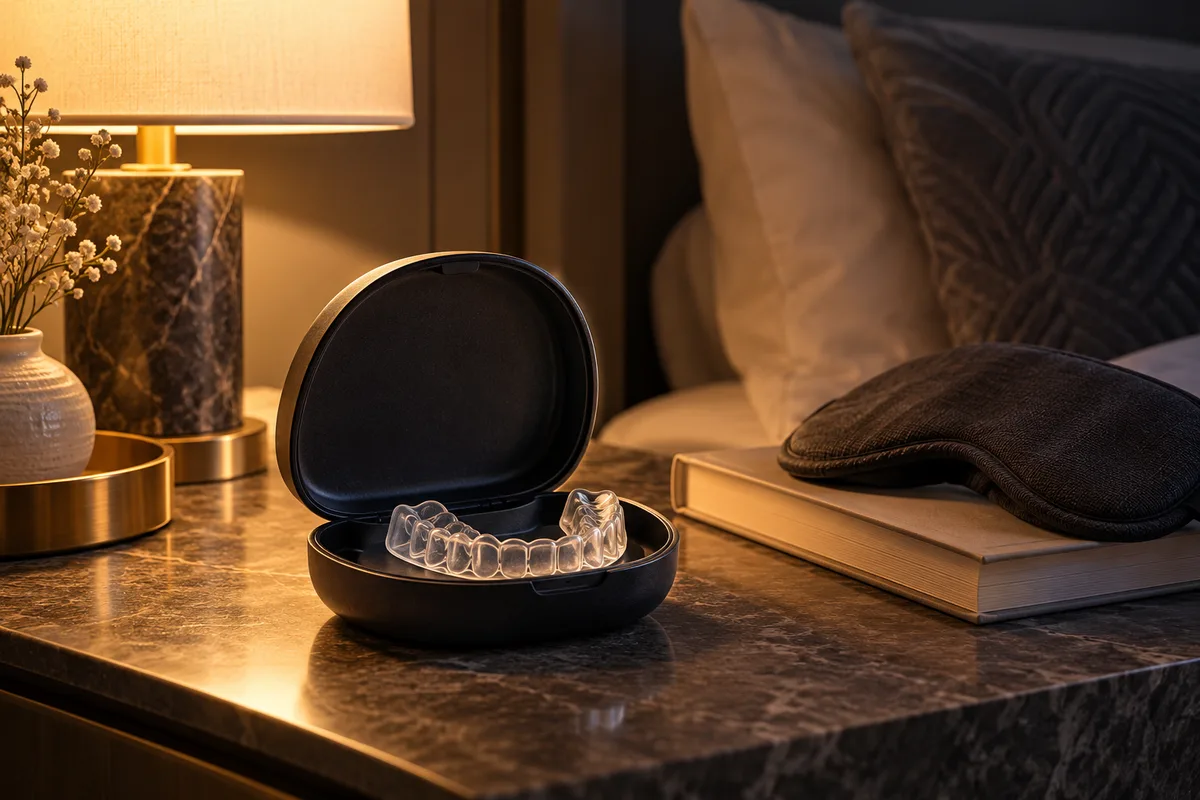
An appropriately selected appliance can separate the teeth and help protect them from damage associated with grinding or clenching. It may not stop the underlying behaviour, and comfort or symptom relief varies. The design and fit need review.
Ask whether the appliance is intended for protection, another jaw-related treatment goal or both. Stop and seek advice if it causes a new bite change, pain or damage. A sports mouthguard, orthodontic retainer and prescribed night appliance have different purposes.
Can I protect veneers, crowns and implants with the same device?
The plan needs to account for existing restorations and the way your teeth meet. Tell the dentist about veneers, implant crowns and retainers before an appliance is made. Do not layer a shop-bought guard over another device without professional advice.
If teeth repeatedly chip, discuss the forces before choosing a new cosmetic restoration. A stronger material alone may not address the reason previous work broke. Ask how the restoration and any protective plan will be reviewed together.
What practical changes can I discuss alongside an appliance?
For daytime clenching, awareness and reminders to relax the jaw may help. Discuss stress management, sleep concerns and habits that may contribute to the problem with the appropriate clinician. Avoid using your teeth to open packaging or chewing hard objects.
Before a Gemini assessment in Zayed, note when symptoms occur and bring any current appliance. Explain which teeth or restorations are breaking and what has already been tried. That makes the visit about the cause and protection plan rather than buying a guard without an assessment.