Why can bone be insufficient after a tooth is lost?
The jaw can change after tooth loss, and previous disease or injury can also affect the site. The dentist assesses the available width and height in relation to the planned implant, nearby structures and the position of the final tooth.
The appearance of the gap is not a reliable measure of the bone underneath. Bring previous records and explain when the tooth was removed. Ask the clinician to show the relevant findings on the imaging used for your assessment rather than relying on the phrase weak bone.
Does grafting always mean an extra operation?
No. A smaller defect may sometimes be managed during implant placement. A larger reconstruction may need to heal before an implant can be placed. The sequence depends on the defect and the ability to achieve the planned implant position and stability.
Request a stage-by-stage timetable, including what is uncertain and when the decision will be reviewed. Ask whether a temporary replacement is possible and what it must avoid during healing. Grafting does not guarantee that an implant will eventually be suitable.
What should I know about graft materials?
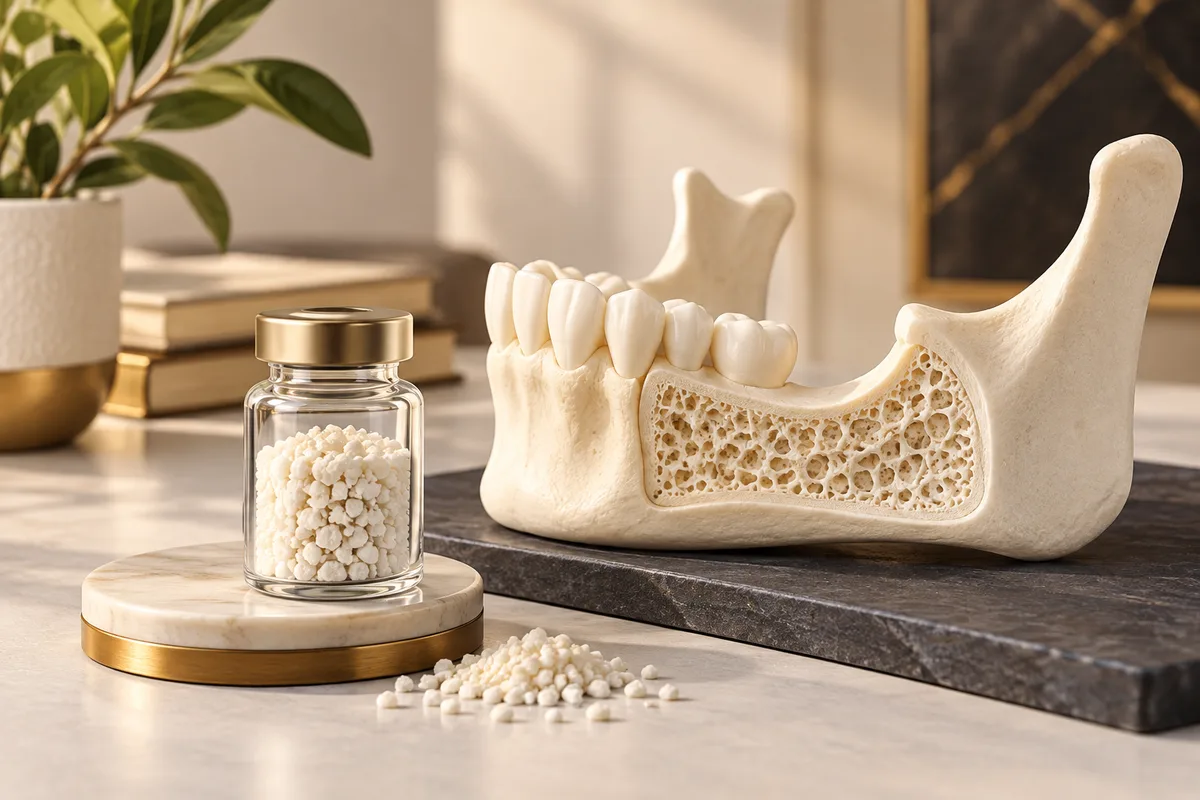
Materials can come from your own bone, human donors, animal sources or synthetic substitutes. A protective membrane may also be used. The choice is specific to the procedure and should be explained before consent.
If religious, ethical or personal preferences affect your decision, raise them early. Ask for the material name, origin and alternatives, and whether choosing another option changes the expected procedure. Do not assume all products called artificial bone are synthetic.
- What is the material and where does it come from?
- Is a membrane needed, and is it dissolvable?
- Will bone be taken from another site?
- Which additional risks or costs apply to this plan?
What risks and healing issues should I discuss?
Possible problems include infection, exposure or loss of graft material and insufficient healing. The risks depend on the operation, location and individual health. Smoking and medical factors can affect healing; give a complete history and medicine list.
Ask for individual aftercare instructions and a contact route for increasing pain, swelling, bleeding or other concerns. Do not start or stop medicines yourself. If the graft needs further treatment, clarify how that would affect the implant plan and costs.
Are there alternatives if I do not want grafting?
Depending on the site, a different implant approach, a bridge or a removable replacement may be considered. These options are not suitable for everyone. Ask the dentist to compare function, tooth preservation, maintenance and the practical commitment of each realistic option.
At a Gemini assessment in Kazan Plaza, explain your preferences and ask whether specialist input is needed. This guide describes possible treatment planning; it does not confirm that any particular graft procedure will be offered or appropriate for you.