
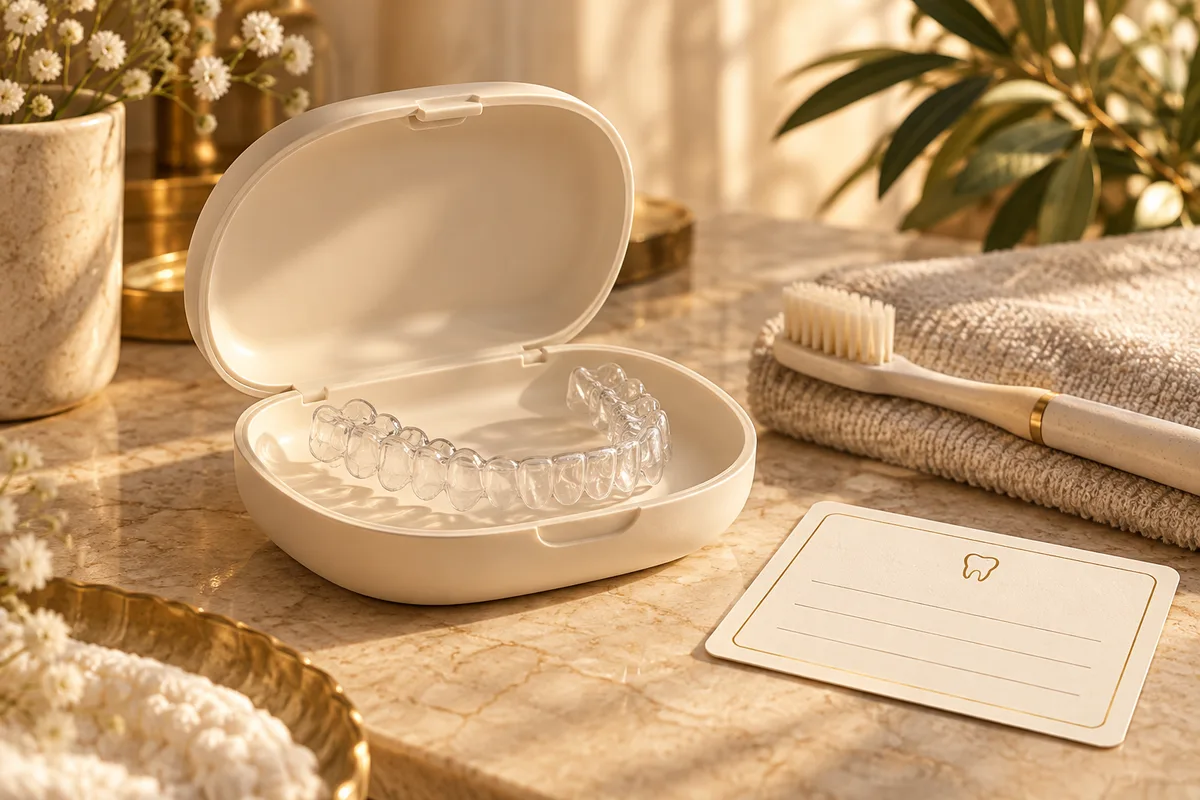
Why can teeth move after apparently successful treatment?
The tissues around teeth adapt after movement, and natural changes continue later. Retainers support the positions achieved during active treatment. Finishing the final aligner or removing brackets does not remove that ongoing tendency to move.
Discuss retention before treatment finishes so you know what commitment follows. Ask whether the plan is different for the upper and lower teeth and who will review the retainers after the active orthodontic appointments end.
How do fixed and removable retainers differ?
A fixed retainer is bonded behind selected teeth and remains in place. A removable retainer is taken out according to instructions and may be a clear tray or a wire-and-acrylic design. Some patients use a combination for different parts of the mouth.
Fixed does not mean maintenance-free: cleaning around the wire and checking the bond remain important. Removable retainers depend on consistent use and safe storage. Ask which design fits your teeth, cleaning ability and treatment history rather than choosing by appearance alone.
| Design | Daily responsibility | Reason to contact the team |
|---|---|---|
| Fixed | Clean around wire and bonded areas | Loose bond, distortion or irritation |
| Removable | Wear as prescribed, clean and store safely | Lost, cracked, warped or not fitting |
How long should I wear my retainer?
Follow your orthodontist's schedule. Many patients are advised to continue some form of long-term retention, often at night, but the initial hours and changes over time are individual. Do not stop merely because the teeth look straight.
Make the routine practical: identify when you remove it, where its case stays and what you do while travelling. If regular use has become difficult, discuss the obstacle early rather than waiting until the fit changes.
How should a removable retainer be cleaned and stored?
Follow the cleaning method specified for the material. Avoid hot water that can distort plastic and harsh chemicals that are not intended for the appliance. Keep it in its protective case when removed, away from pets, heat and accidental disposal.
Ask whether a recommended cleaner is appropriate for your design and how to manage deposits or persistent odour. For a fixed retainer, request a demonstration of cleaning between the teeth and around the wire. Routine dental checks still matter.
What if it is tight, broken or lost?
Contact the orthodontist promptly. Do not force a retainer that will not seat, bend a wire, heat a tray or continue wearing a broken edge that injures you. The team needs to assess whether the appliance or tooth position has changed.
Ask about replacement fees and record availability when planning treatment. At Gemini in Zayed, bring the retainer and previous orthodontic records for an assessment; the team can clarify the appropriate clinician and next step rather than assuming a replacement alone is enough.