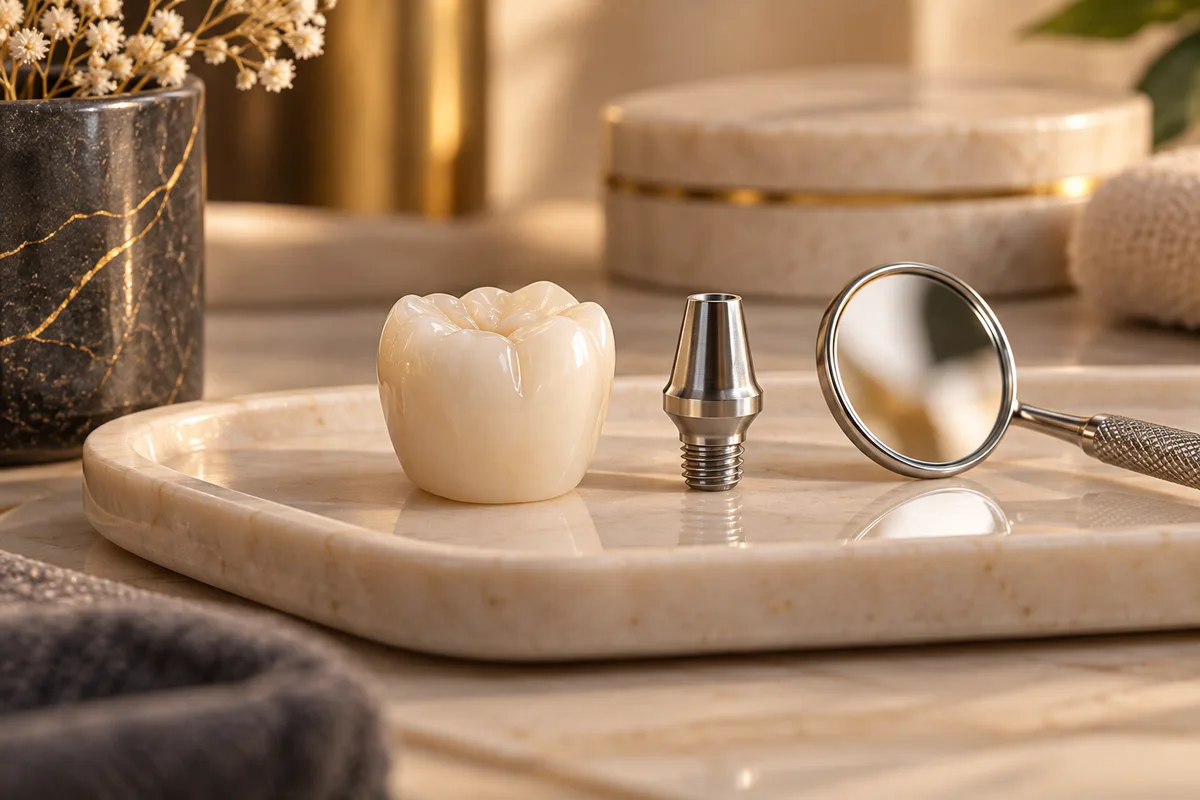
What is the difference between the implant, connector and crown?
The implant is the component placed in the jaw; a connector and the visible replacement tooth complete the restoration. Designs differ, so the word 'screw' can describe different parts. A healing component during treatment is also different from a final crown.
When calling, describe what you noticed rather than naming a failure yourself: a click, a changed bite, a loose tooth or a detached part. Say whether the final crown has been fitted and when the work was done. This helps the dentist plan the assessment and request the right records.
Does movement mean the whole implant has failed?
Not necessarily, because a restoration can loosen while the implant itself remains stable. Other problems can involve surrounding tissues or loss of implant stability. Examination, and imaging where indicated, are needed to distinguish them and assess what can be retained.
There is no reliable home test. Repeatedly pushing the crown can add stress, and absence of pain does not prove stability. If a component detaches, keep it in a clean container for the appointment rather than putting it back into your mouth or discarding it.
When does the problem become urgent?
New movement, pain, swelling, discharge or a sudden bite change deserves prompt contact with the treating team. Explain whether symptoms are progressing and whether the restoration was recently fitted. Do not continue chewing normally while waiting for a review.
Breathing or swallowing difficulty, spreading mouth or neck swelling, or eye involvement requires emergency medical care. A loose component that disappears with coughing or breathing symptoms also needs urgent medical assessment. Routine online messages are not the appropriate channel for an emergency.
What records make assessment and repair easier?
The implant make, model, placement date and restoration details can help identify compatible parts. Bring your implant record or passport, previous imaging and the contact details of the original team. An invoice saying only 'implant' may not supply enough technical information.
If treatment was performed abroad, request the records before changing providers. A new dentist needs to inspect the situation and confirm component access before promising a repair. Availability, the underlying cause and the proposed work all affect the quotation; a universal tightening fee would be misleading.
- Implant system and available component details.
- Placement and crown-fitting dates.
- Relevant images, aftercare and maintenance history.
- Any detached component, stored safely outside the mouth.
How can I reduce the chance of repeated problems?
Follow a cleaning and review plan matched to the restoration and surrounding tissues. Ask the dentist to demonstrate how to clean areas you cannot reach easily and what changes should prompt a visit. Implants need maintenance even though the implant material cannot develop tooth decay.
Mention grinding, repeated chips and changes in the way teeth meet. If seeking assessment at Gemini in Zayed, explain that the implant may have been fitted elsewhere and bring its records. Confirm the appropriate clinician and availability of parts instead of assuming every implant system can be repaired immediately.