
Will I still need a numbing injection?
You may. Many gum procedures use local anaesthetic even when a laser is selected. The clinician decides what pain control is suitable for the tissue and amount of work. Do not interpret a laser advertisement as confirmation that your own appointment will be injection-free.
If the injection is what worries you, say so before the visit. Ask how the team will explain and check the numbing step, and whether treatment can be planned in manageable stages. Discuss a past difficult experience rather than assuming this visit will feel the same.
What sensations should I discuss before treatment starts?
Ask for an explanation matched to your procedure, including whether you may notice pressure, sound, water or a change in temperature. Discuss what should prompt a pause and how you will communicate when your mouth is open. If you feel pain, tell the clinician rather than trying to endure it.
Agree on a simple stop signal, such as raising a hand, and ask how breaks will work. You can also request a short explanation before each major step. These are practical communication preferences, not a promise that a particular technique will eliminate every uncomfortable sensation.
Is a dental laser radiation-free or risk-free?
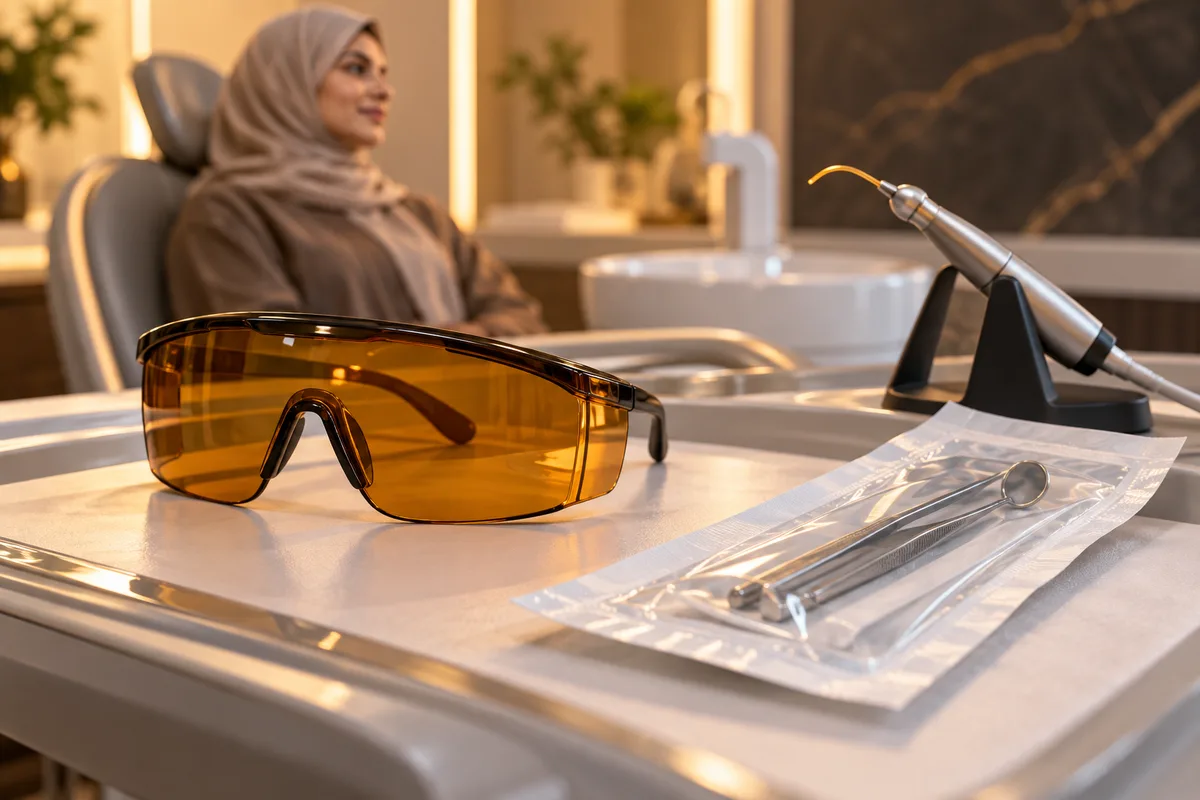
Neither is the right description. Lasers use non-ionising light energy, which differs from X-rays, but incorrect use can still injure tissue or eyes. Device selection, settings, training and appropriate protective eyewear matter. Ordinary glasses should not be assumed to replace laser eye protection.
Ask why that laser is appropriate for the intended work and what risks or alternatives you should understand. The clinician should explain the proposed procedure, not merely the machine name. Safety is also about recognising when conventional instruments or another opinion are more appropriate.
Can there still be soreness after a laser procedure?
Yes. Numbing during treatment and comfort after it are different parts of care. The tissue may be sore while healing, and the amount of treatment affects the aftercare plan. Ask which changes are expected and which need a call to the treating team.
Discuss medication allergies, current medicines and previous reactions before any recommendations are made. Do not copy another patient's prescription or take leftover antibiotics. Ask for instructions you can refer to after the appointment, when it may be harder to remember the conversation.
How should an anxious patient arrange a Gemini visit?
Tell the team what causes the anxiety and whether you want the first visit to focus on assessment and discussion. Ask about the length and purpose of that appointment, what records to bring and who will explain the options. Do not assume sedation or general anaesthesia is offered; any additional service needs direct confirmation.
For laser-related assessment at Gemini in Zayed, the clinical context includes Dr. Haytham Samir Moharrum's documented restorative and laser background. Ask how the proposed procedure applies to your problem and whether a non-laser option is reasonable. A clear, agreed plan is more useful than a blanket promise of painless dentistry.
- Explain the trigger: needles, noise, gagging or a previous experience.
- Agree on the pace and a stop signal.
- Clarify numbing and the recovery plan.
- Confirm the clinician, appointment purpose and available support.